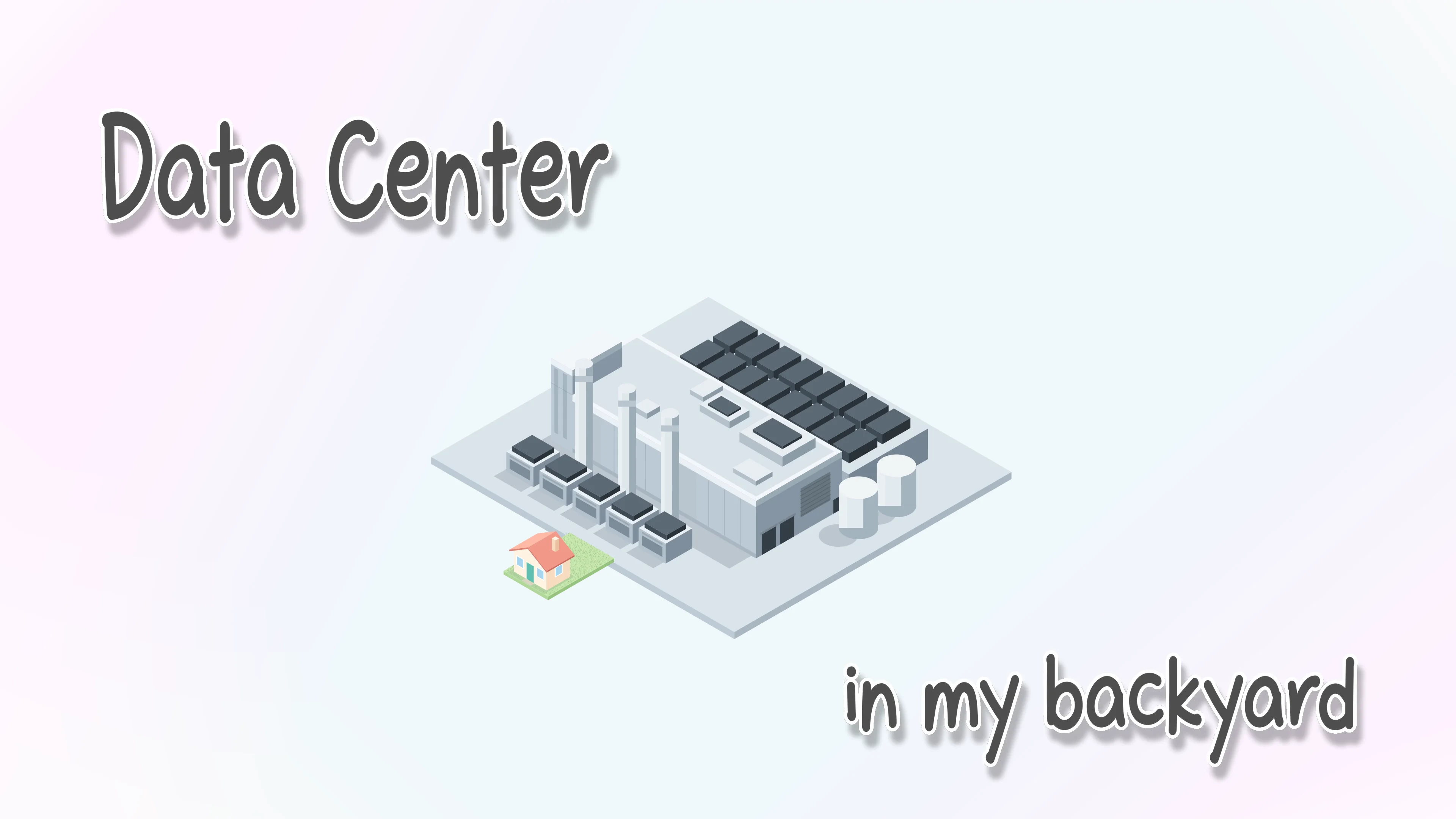
Data Center in My Backyard



Sound 1 / 5
Data Center in my backyard
Hold the button to start pumping
gallons
Who regenerates the water when it is depleted?
That is Google's three data centers in The Dalles, Oregon: 434.4 million gallons in 2024, about a third of all the water the city used.1 The city's own master plan expects residential water rates to climb 99% by 2036.1
Bigger ones exist. xAI's Memphis site draws 1.3 million gallons a day of municipal drinking water, with peak demand projected near five million.3 Two-thirds of the data centers built since 2022 sit in water-stressed regions.5
The data center sector is projected to double by 2030, from 103 GW to 200 GW. The industry itself is worth trillions, and using every resource at its disposal to expand its capacity.
Given this expansion, the intention of this visualizer is to depict various dimensions of data center impact, in fun and friendly terms.

A 100 megawatt data center runs flat out, day and night. How many homes could that power?
homes drawn
That is 100 MW divided by the 1.23 kW an average US home draws.7 100 MW is the upper end of an ordinary facility.9 xAI's Colossus 2 was running 946 MW in June 2026 — about — homes.8
Data centers majorly influence energy market bidding behavior, raising electricity costs for everyday residential taxpayers.12 New Jersey's electricity rates rose 17–20% in June 2025 after a PJM capacity auction.10
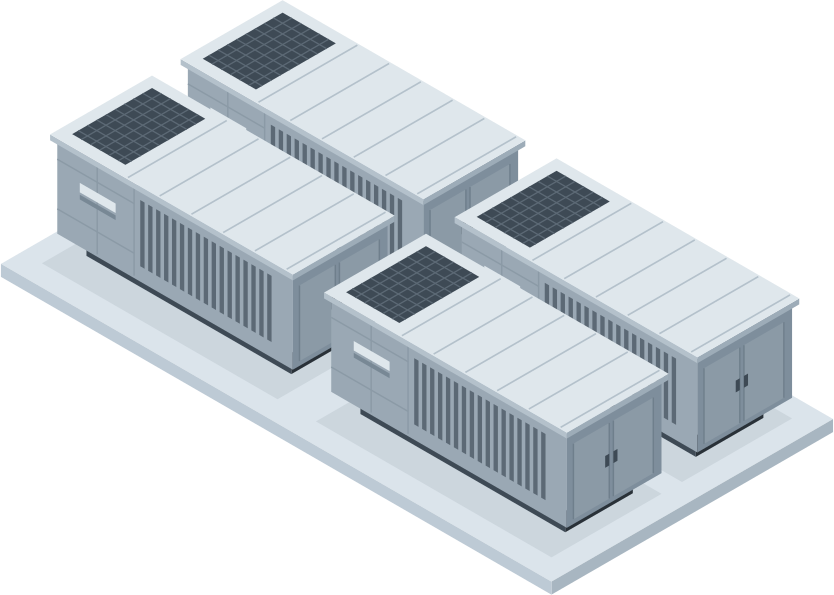
Diesel Generators
While intended for infrequent use, data centers will use them to supplement power demand.
Per unit of electricity, an industrial diesel generator puts out 200 to 600 times the nitrogen oxides of a gas plant.17 Northern Virginia's backup generators, at a tenth of what their permits allow, are modelled at around 14,000 asthma symptom cases and 13–19 premature deaths a year — a public health burden of $220–300 million.18 At the full permitted level it is $2.2–3.0 billion.18
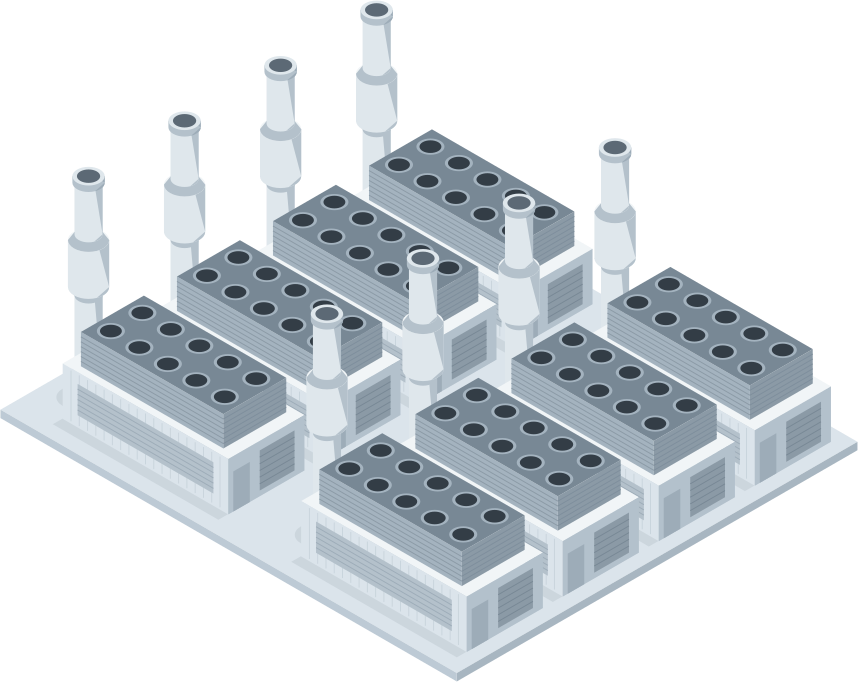
Natural Gas Turbines
Installed on site to make more power for AI and avoid grid limitations, at the expense of releasing nitrogen oxides, formaldehyde and fine particulate matter.
Data centers can have more than the eight turbines modeled here. xAI runs 59 across its Colossus sites — the most known anywhere — and 27 of them were found running with no air permit at all.1514 That is roughly —.
One Loudoun County facility permitted for eight gas turbines and 51 diesel generators — the same pairing drawn here — was modeled at causing $53–99 million a year in health damage.16
Cars derived from 56.51 tons of PM2.5 a year16 against a car's brake and tire wear.19 All sources →
Standing 530 ft away, outside
dBA
Turn your volume down before you press play. You start out at 530 ft, where the houses are. Raise it only until that is a distant hum — then drag the marker in along the line.
You are listening to a real data center: the facility on Prairie Ronde Street in Dowagiac, Michigan — a crypto mine converted to AI in 2024, its cooling fans running without pause ever since.23 Residents are suing over the noise.
The recording was made 530 ft out, where a calibrated meter read 60.0 dBA. Every other distance on this page is re-rendered from that one, so closer is brighter as well as louder. The levels are true against each other; only your speakers set the absolute one.All sources →
Note also that neither a decibel meter nor this recording captures the real noise, predominantly low-frequency whooshing and hums in the 60-200Hz range. These low frequencies easily travel for miles, and are extremely difficult to block out — just think of someone's bass-heavy music in traffic. As a result, the perceived sound is much louder than the quantitative measurement or reproduction here.
What sounds could we hear when the noise isn't there?